http://www.commonwealthwriters.org/translation-hay-festival-dhaka-2013/
Posts
The mundane Monday by Jackie Kabir

9:00am THE day was like any other working day. Walked into the office, greeted everyone and sat at my desk to do my work. 5:00 pm IN THE car on my way back home. The traffic moving at the speed of a snail, sometimes not moving at all. I spied the car next to mine, a couple chatted away. The rickshaw puller behind the car swore at the one in front of him as he pushed the vehicle forward on its front wheel. I looked at my watch, need to get home, take a shower and head back to a meeting that the chairman had called at his place. 7:30pm I WAS waiting for the meeting in my chairman’s living room. Kashem Mia, my cook cum cleaner cum guard called me. I answered my phone. ‘What is it Kashem Mia?’ ‘There is someone named Shila from Canada who wants to see you.’ ‘Well Kashem Mia, I am at the house of my boss, waiting for him and others for a meeting. Tell her I won’t have time today. And Shila..umm I don’t think I know anyone by that name.’ There must have been a bit of annoyance in my voice...
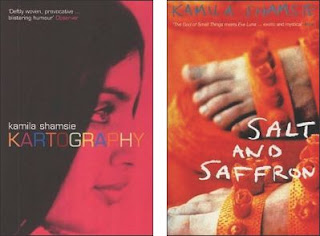
Salt and Saffron; Kartography Kamila Shamsie Kamila Shamsie's second novel Salt and Saffron (2000) is a work on the partition of India in 1947. Dard e Dil, a feudal family suffered during the partition like any other in India and Pakistan. Kamila has brought out the pain, sorrows and love of the triplets Sulaiman, Taimur and Akbar in her writing. Their father, a wealthy land owner thought “bearing the names of great kings would enable his sons to face up to any crisis, but he never paused to think what would have happened if the namesakes Sulaiman the Magnificent, Akbar the Great and Taimur, sometimes called Taimur Lang or Tamburlaine, .... had been born brothers!” In 1938 Taimur disappeared while the boys were being sent to Oxford to get their degrees. He later wrote a letter saying that as they were born the year after the Jalianwalla massacre and “I lack your gift for erasing, nay! Evading history. This is our curse: Akbar and Sulaiman, we are kites that have their strings ...
poems
False Hope The moon beams in the sky Tell me that it has been to where you are. The wind whispers your name to me. The autumn leaves roll and announce your arrival. Yet I’m not convinced That you will come Once again to soothe my tormented soul; To kiss away the cascade of tears that roll down. A missed Beat. The khol on my eyes won't smudge. The pleats of my sari won't be out of place. My bangles will make the clinking noise that you so admire. Even the bindi on my forehead will shine in the sun. Only my heart will but miss one beat Because you are not there. It wont matter to the world No it won't. Nothing is indispensable At least not anymore But my heart will miss a beat thinking of the space that was once yours! Illusion Day emerges out of night Night out of day Summer wades into monsoon Autumn departs as harvest announces its arrival. The dry leaves swished away by the wind White ...
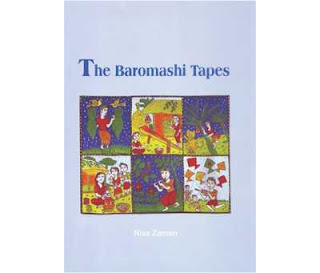
Baromashi or baromaishya are songs sung by rural women narrating their agony of being away from their loved ones. The songs usually describe the state of a woman in different seasons while her loved one is missing. As the song mentions, baromashi means 'of twelve months.' Even though there are many baromashi songs which have become famous and are often sung by renowned artists, there are very few books on baromashi. Some writers have collected and compiled them in the form of research works. Prof Razia Sultana is one of them. In her slim volume, Shahitya Bikkon, published by Bangla Academy in June 1998, she has dedicated a chapter to Baromashi literature. Purbanga Geetika or East Bengal Ballad by Dinesh Chandra Sen has compiled over fifty ballads which were carried on verbally from generation to generation in different parts of Bangladesh. The ballads were composed by illiterate people of the villages with their collective wisdom as early as the 14th century. Chandra Kumar ...

Quamrul Hasan was intrigued by haiku when he was in his first year at university doing his honours in English literature. A course was being taught at the time. It was the renowned haiku as practiced by famous writers. As a student Quamrul wanted to be able to compose a few of these three lined, non rhyming poems. Finally he did write a few. A year or so later there was a haiku competition in The New Age Literature Page. As he had already composed some haiku, he sent them to the literary editor, Prof Niaz Zaman. To his utter surprise, his haiku was selected among the ten best haiku and was published in the literature page along with some of his teachers' works. That inspired the young writer and he continued with his endeavours. He was invited to the Japanese ambassador's residence along with the other published writers. Quamrul Hasan didn't have to look back since then. Hasan was published in Asahi Haiku Network, a joint venture of Asahi Shimbun and the International He...